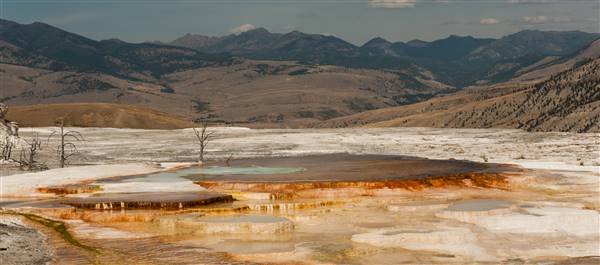
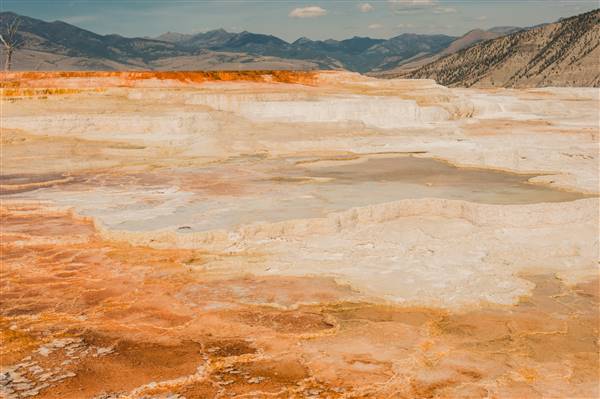
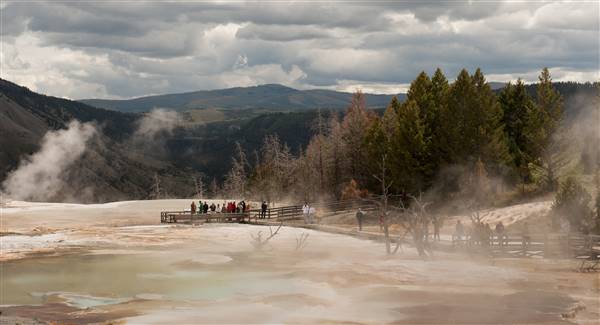
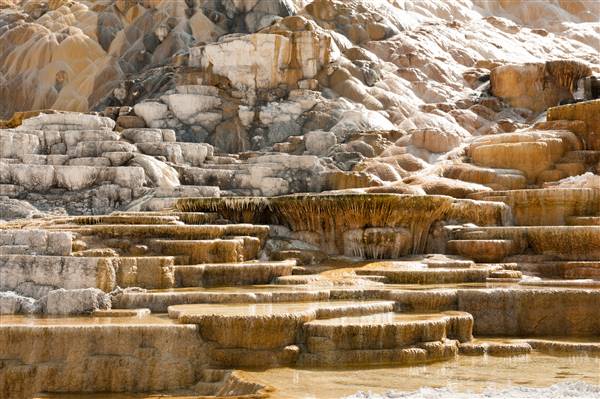
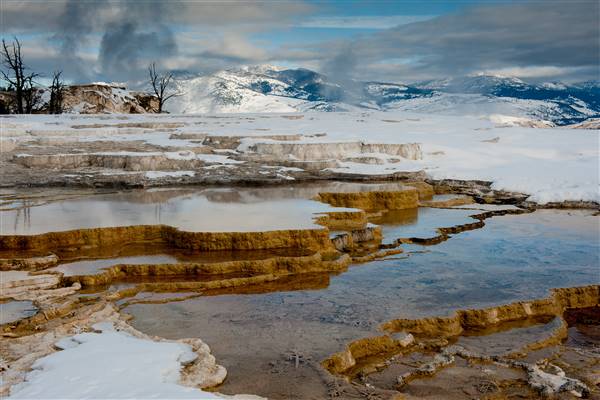
Several key ingredients combine to make the Mammoth Hot Springs Terraces: heat, water, limestone, and a rock fracture system through which hot water can reach the earth's surface.
Today's geothermal activity is a link to past volcanism. A partially molten magma chamber, remnant of a cataclysmic volcanic explosion 600,000 years ago in central Yellowstone, supplies one of the ingredients, heat.
Hot water is the creative force of the terraces. Without it, terrace growth ceases and color vanishes. The source of the water flowing out of Yellowstone's geothermal features is rain and snow. Falling high on the slopes in and around Yellowstone, water seeps deep into the earth. This cold ground water is warmed by heat radiating from the magma chamber before rising back to the surface.
Hot water must be able to reach the earth's surface in relatively large volumes to erupt as a geyser or flow as a hot spring. In Yellowstone, many conduits remain from the collapse of the giant caldera; frequent earthquakes keep this underground "plumbing" system open. Even though Mammoth lies north of the caldera ring-fracture system, a fault trending north from Norris Geyser Basin, 21 miles (34 km) away, may connect Mammoth to the hot water of that system. A system of small fissures carries water upward to create approximately 50 hot springs in the Mammoth Hot Springs area.
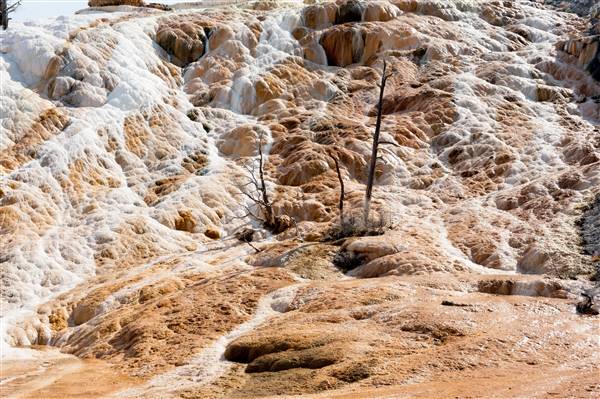
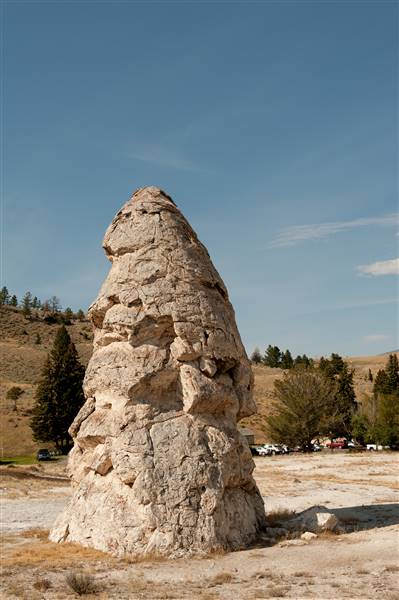
Another necessary ingredient for terrace growth is the mineral calcium carbonate. Thick layers of sedimentary limestone, deposited millions of years ago by vast seas, lie beneath the Mammoth area. As ground water seeps slowly downward and laterally, it comes in contact with hot gases charged with carbon dioxide rising from the magma chamber. Some carbon dioxide is readily dissolved in the hot water to form a weak carbonic acid solution. This hot, acidic solution dissolves great quantities of limestone as it works up through the rock layers to the surface hot springs. Once exposed to the open air, some of the carbon dioxide escapes from solution. As this happens, limestone can no longer remain in solution. A solid mineral reforms and is deposited as the travertine that forms the terraces.
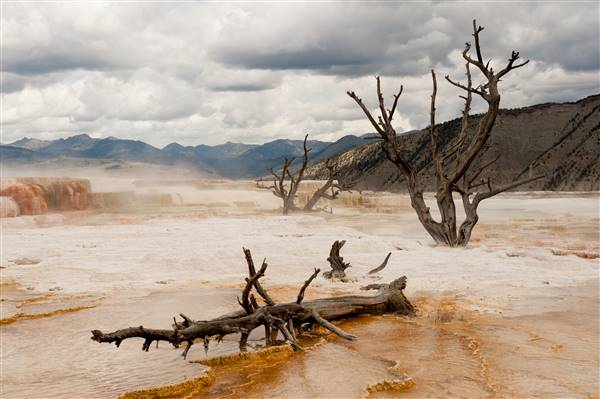
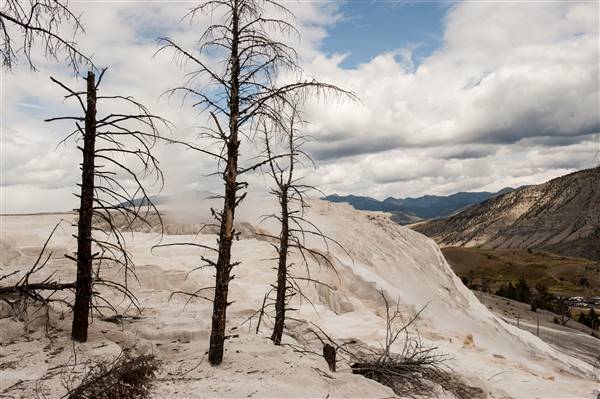
Terrace features can change rapidly in appearance. Don't be surprised to find that some of these features look very different if you visit in person.
Mammoth Area is the home of the only winter location in Yellowstone that is accessible by automobile. In the early days trains carried visitors to Yellowstone. At Gardiner fashionable tourists boarded stagecoaches for holidays at great park hotels. Located near the North Entrance, the Mammoth Hot Springs Hotel offers comfortable accommodations and exquisite dining in a casual setting. Miles upon miles of back country are offered for cross-country skiing on tracked trails, and groomed roads await snowmobilers. The fun continues with snowcoach tours, ice skating, and wildlife tours. Enjoy soothing hot tubs for a perfect end to an active day!