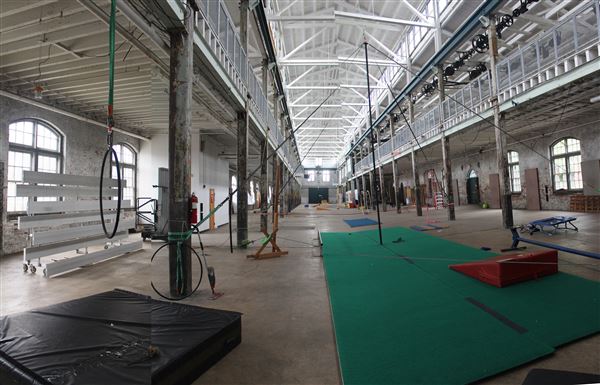
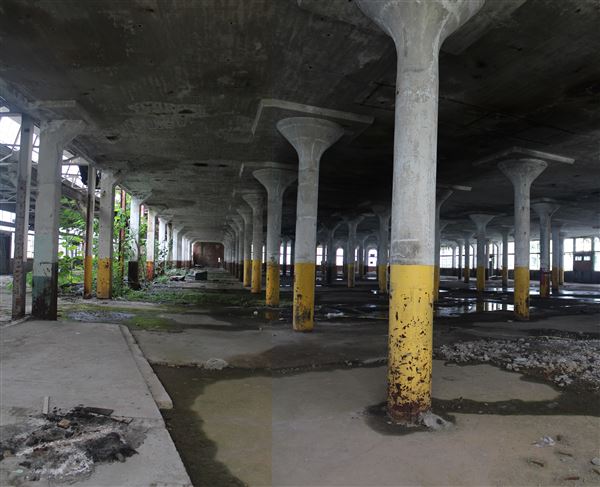
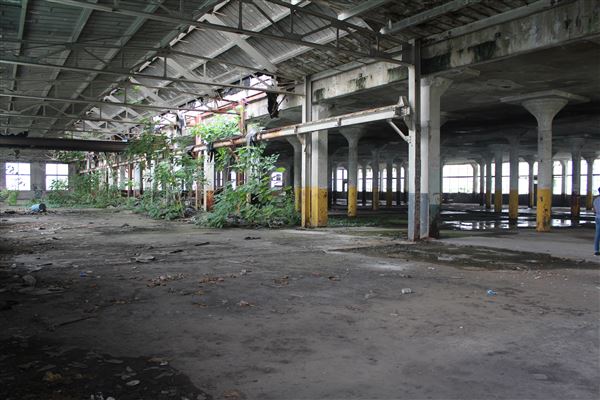
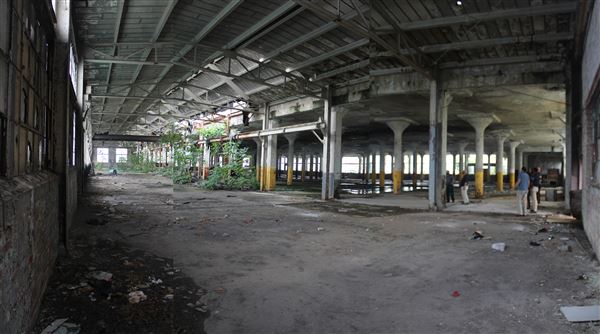
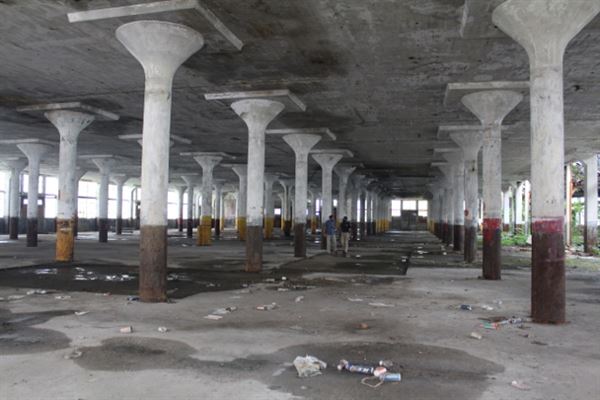
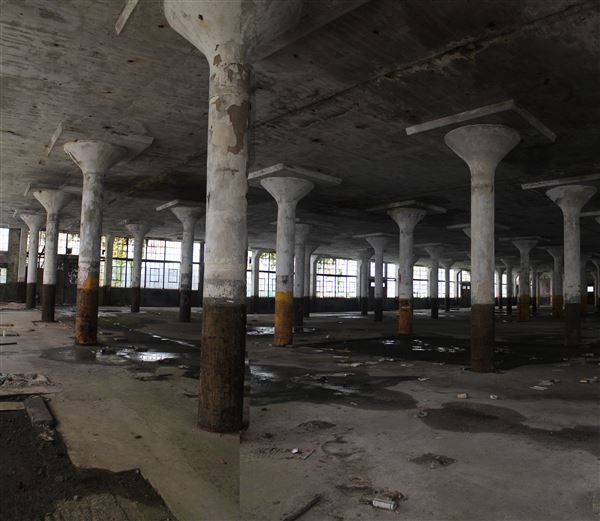
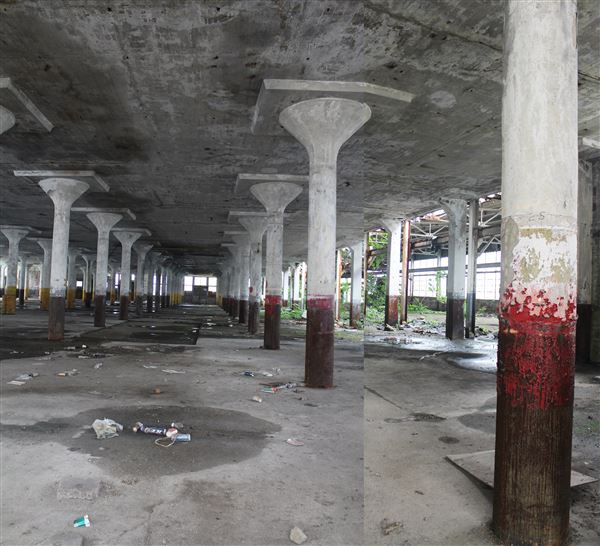
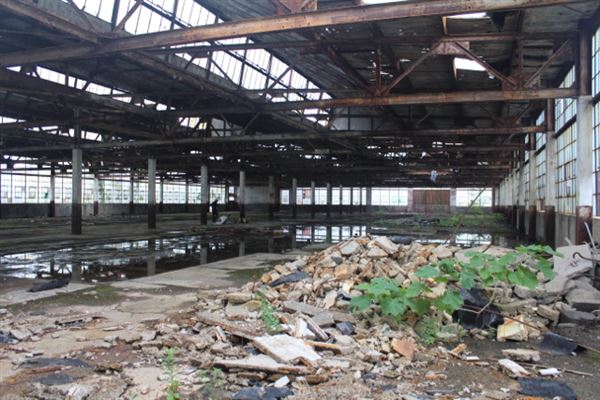
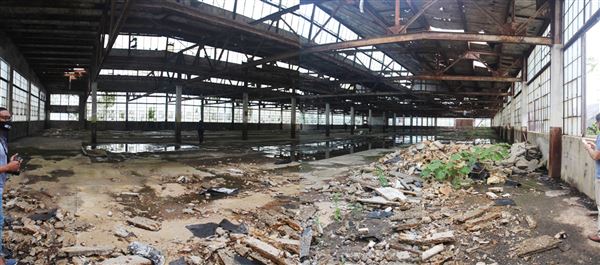
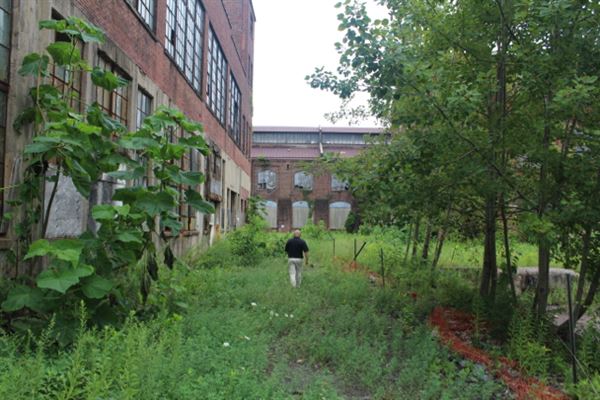
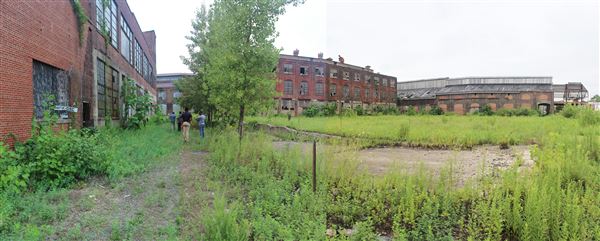
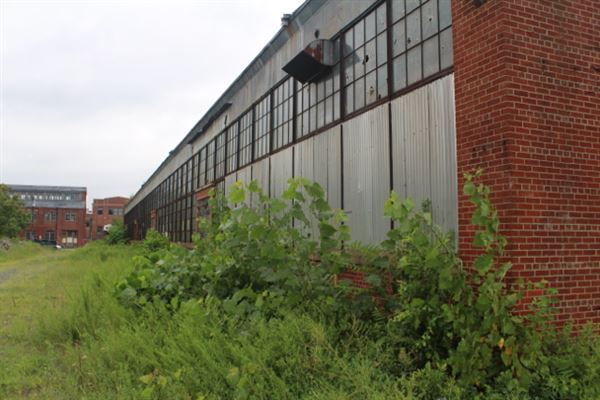
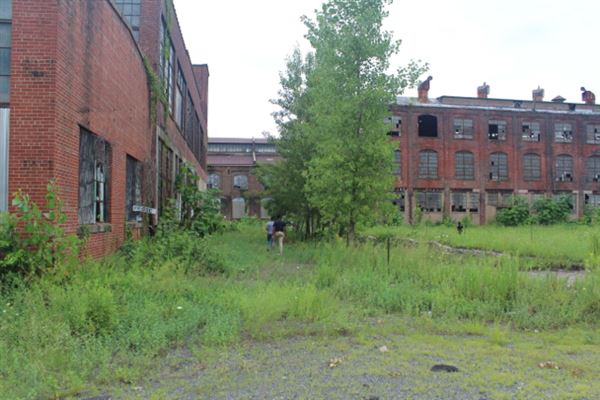
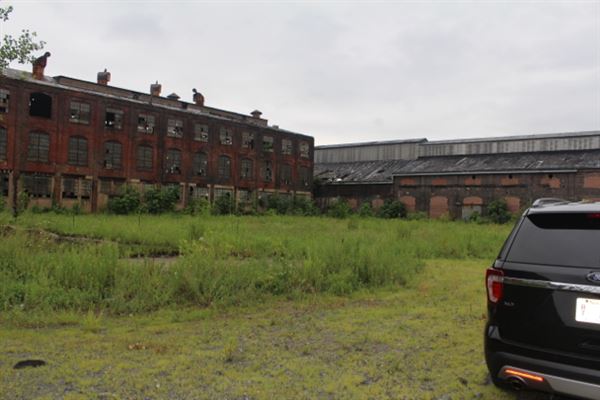
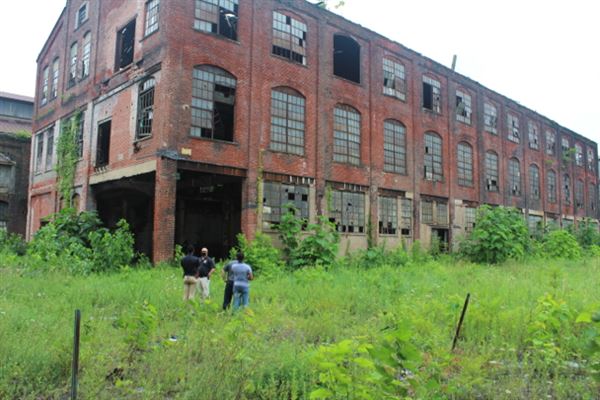
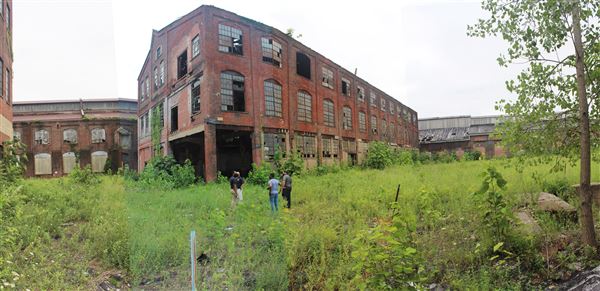
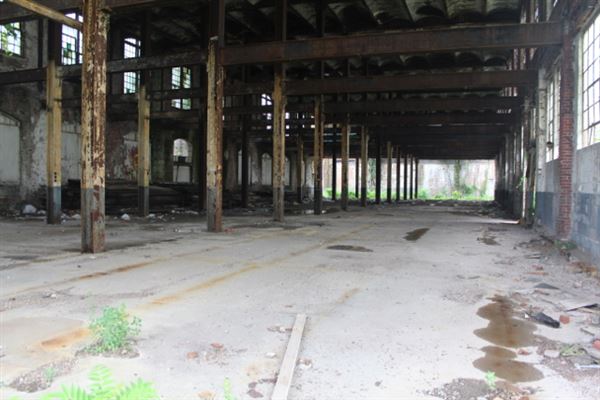
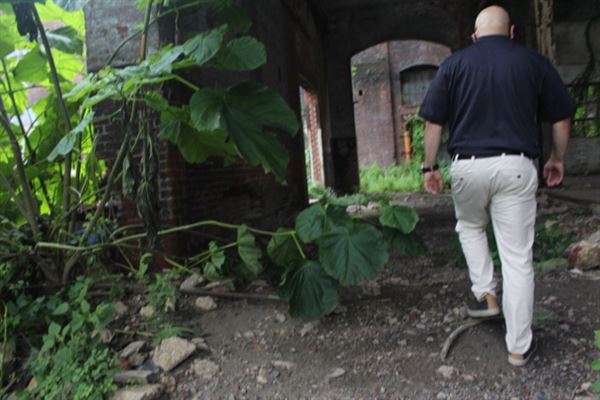
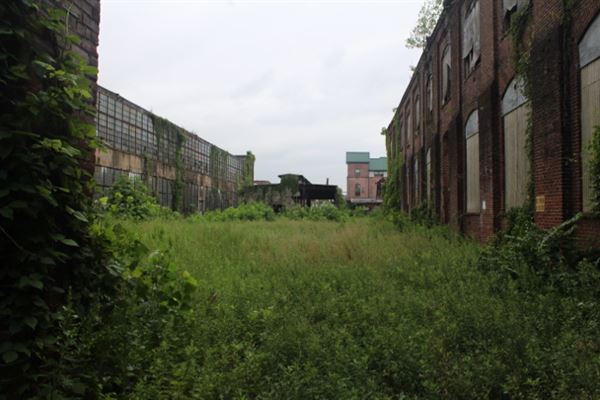
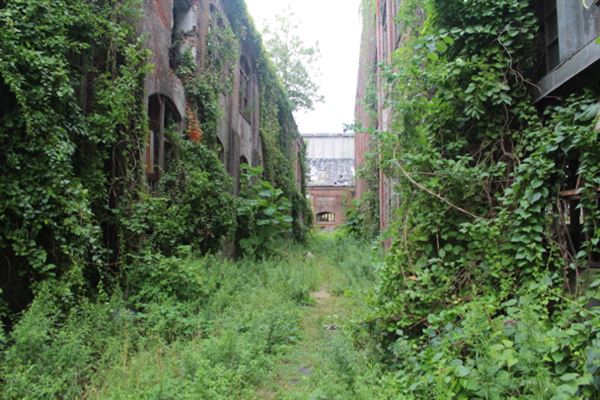
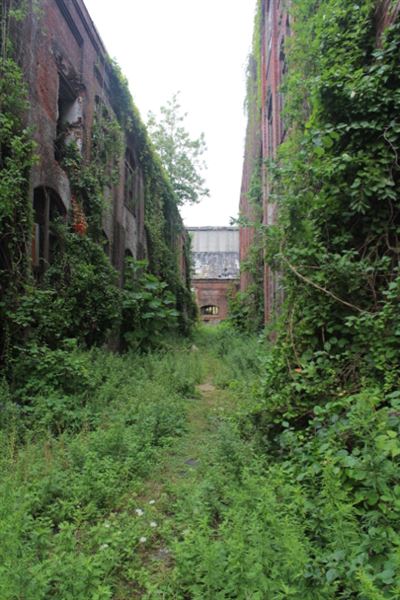
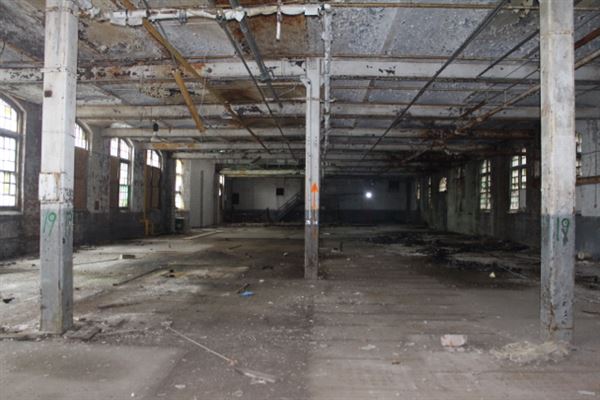
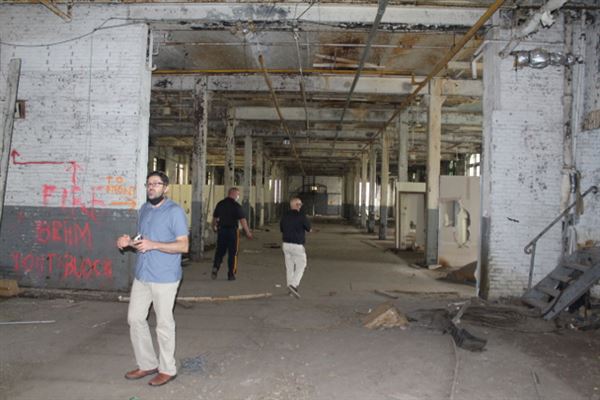
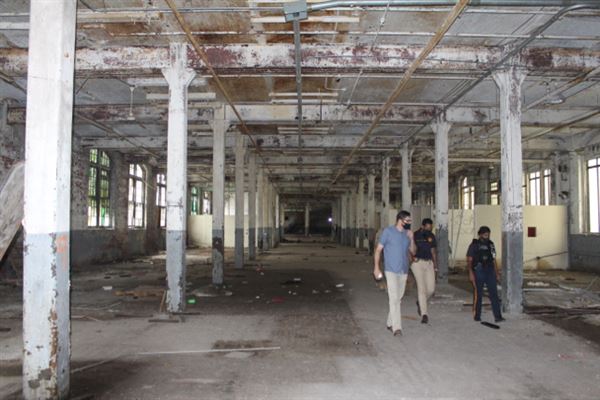
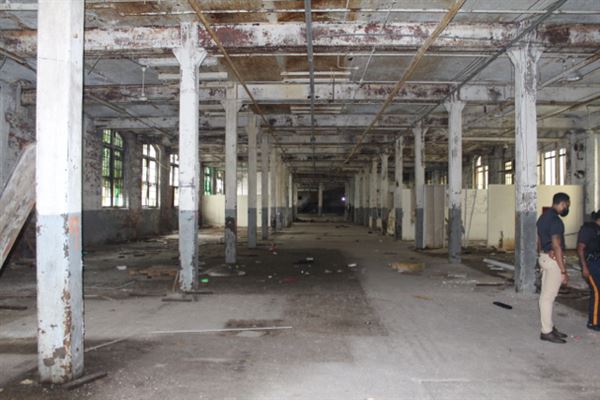
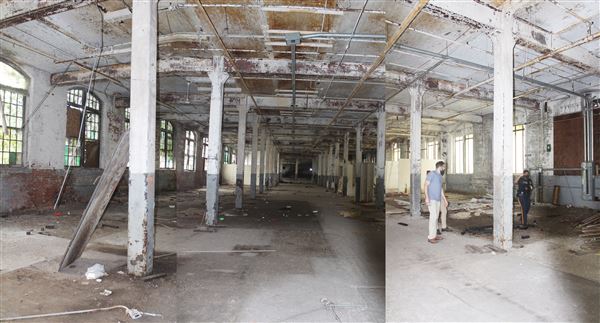
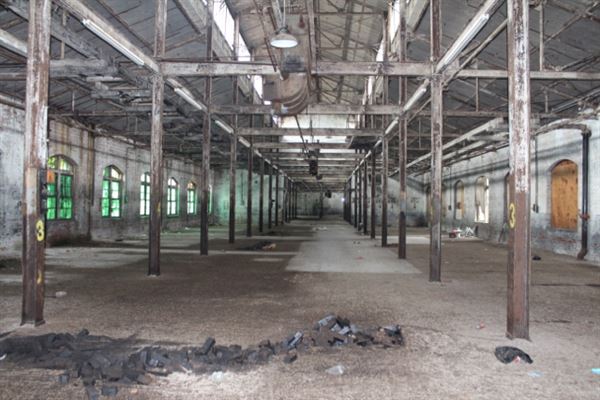
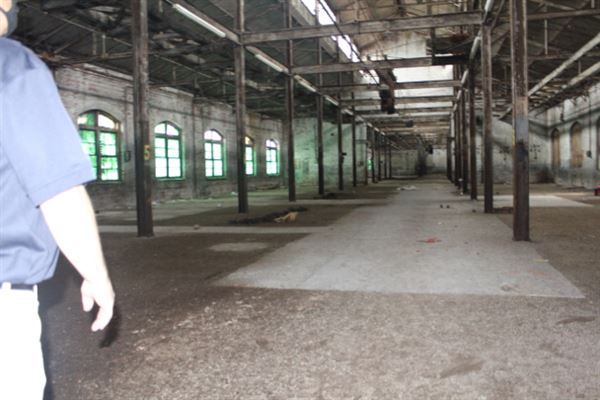
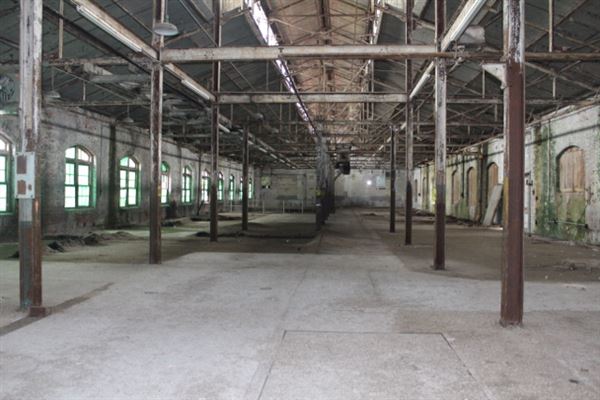
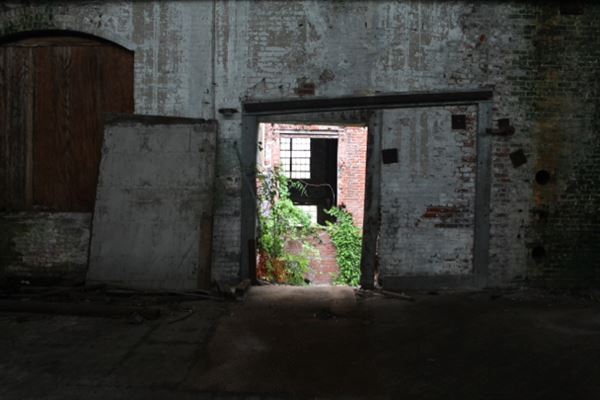
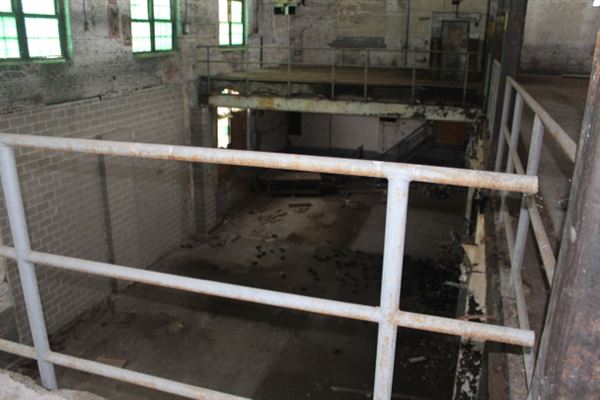
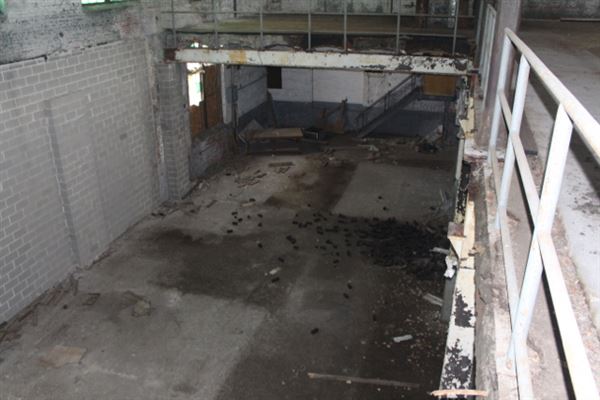
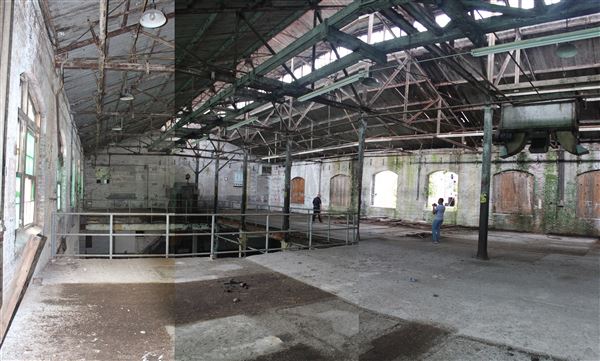
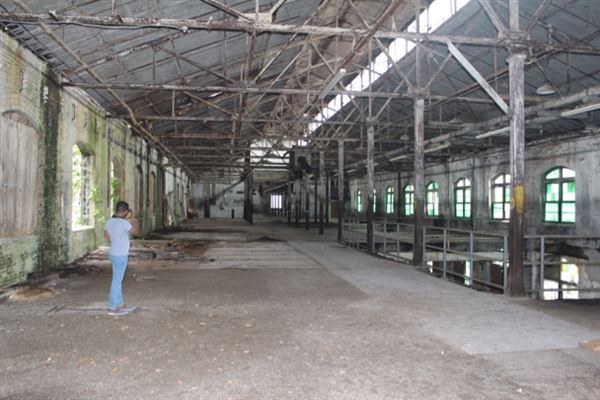
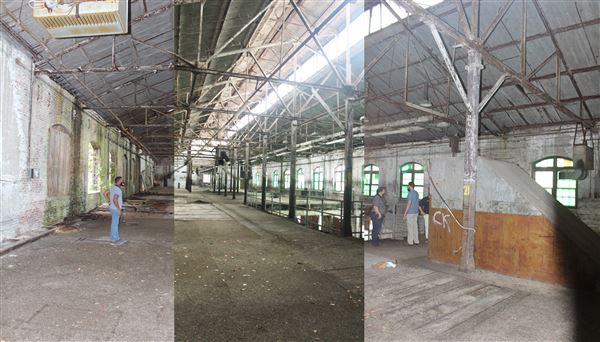
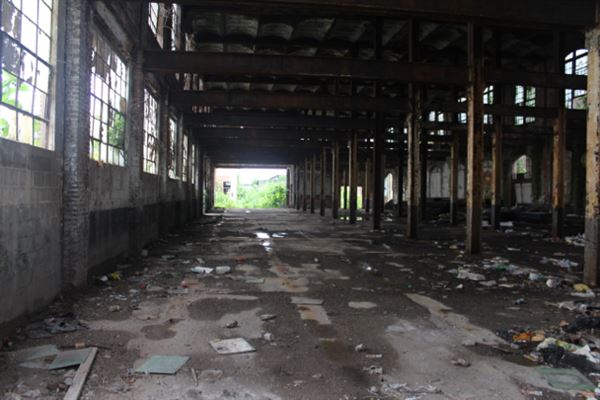
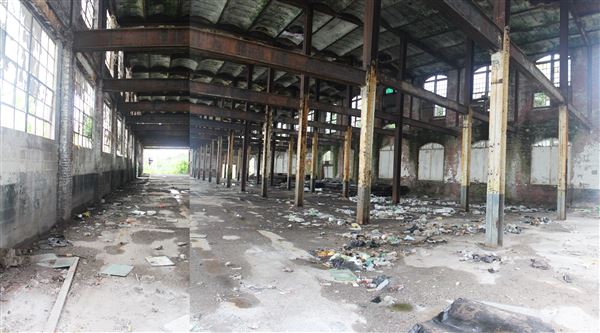
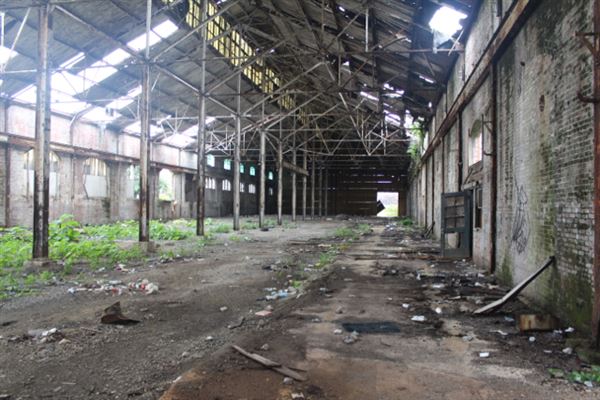
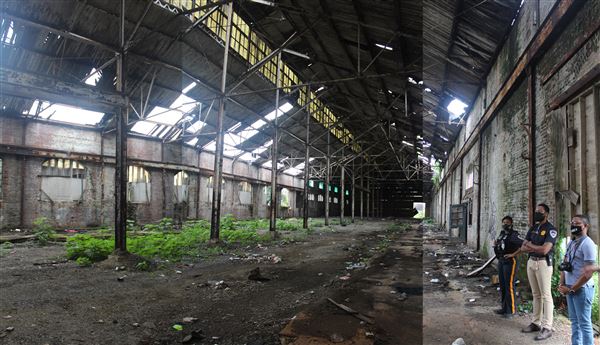
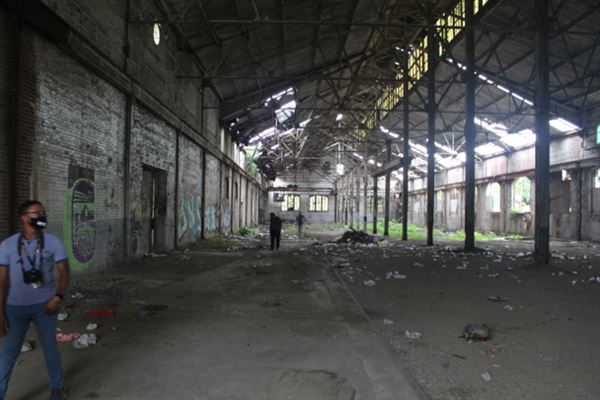
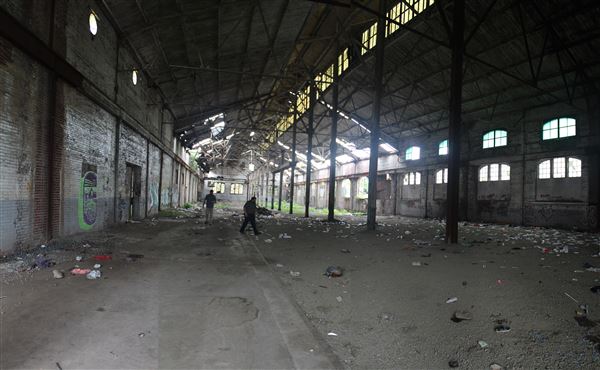
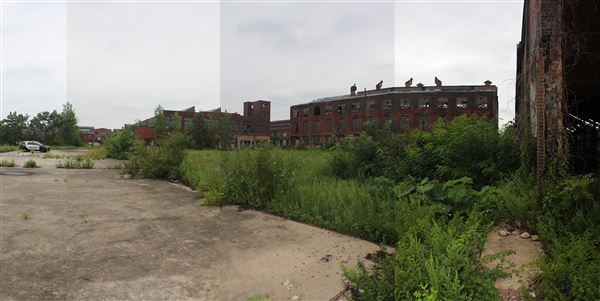
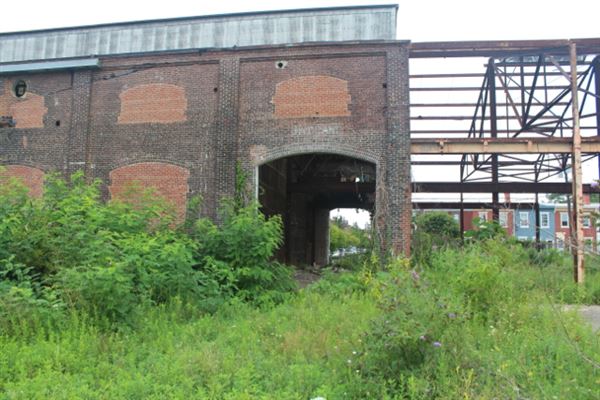
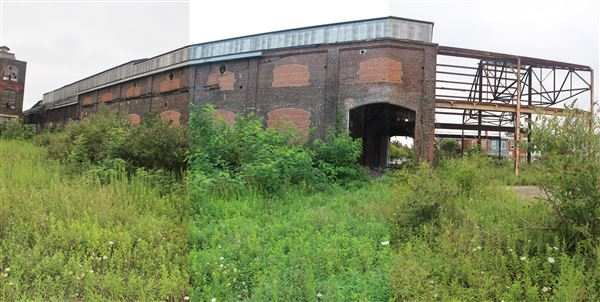
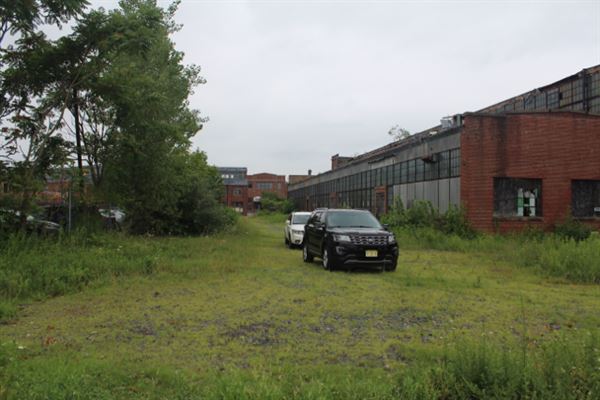
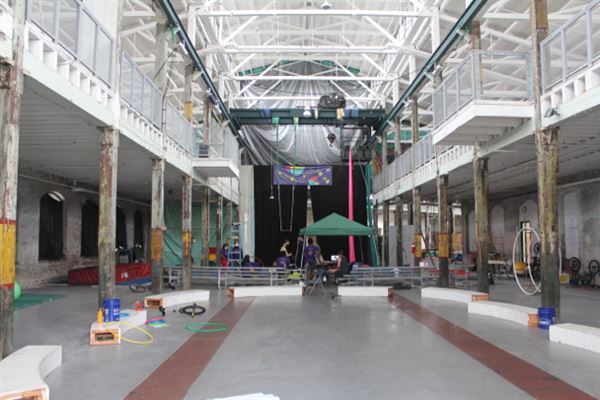
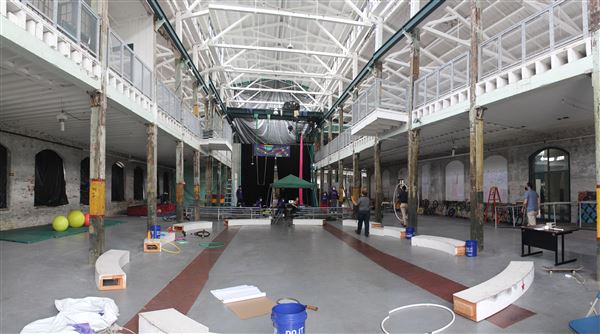
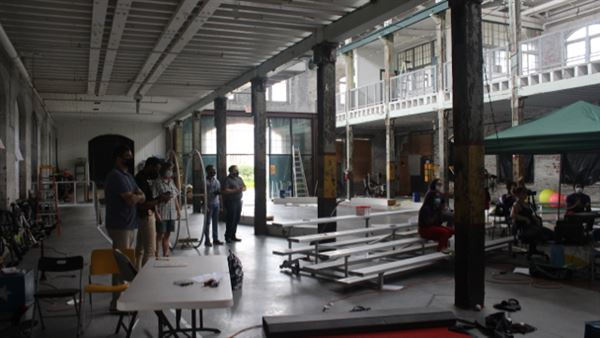
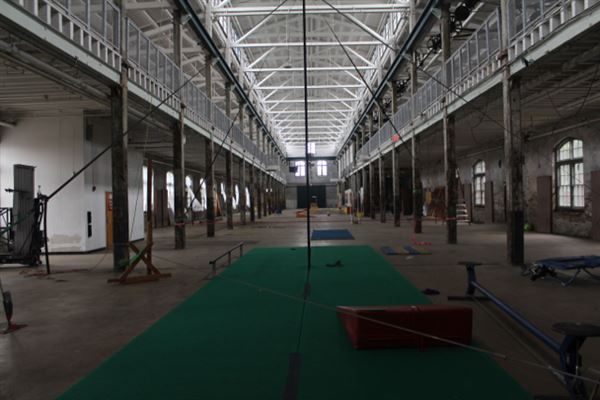
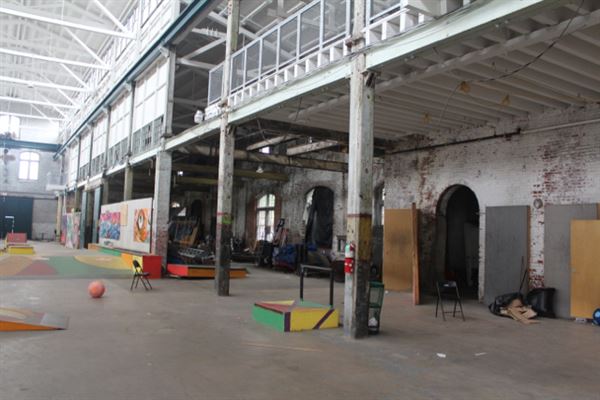
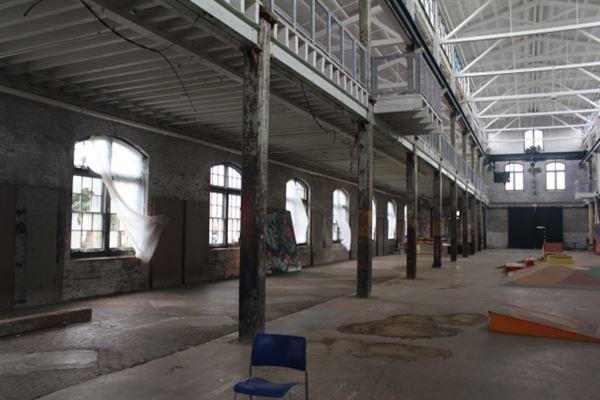
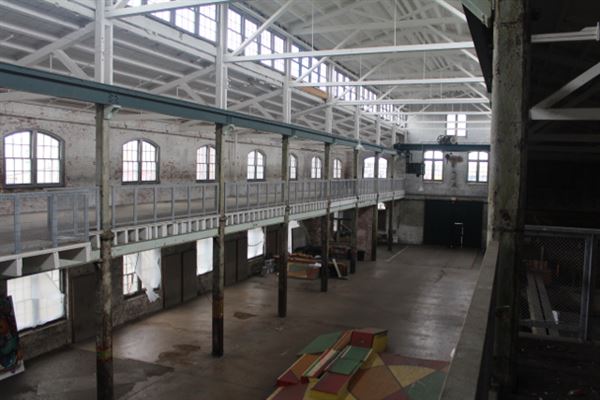
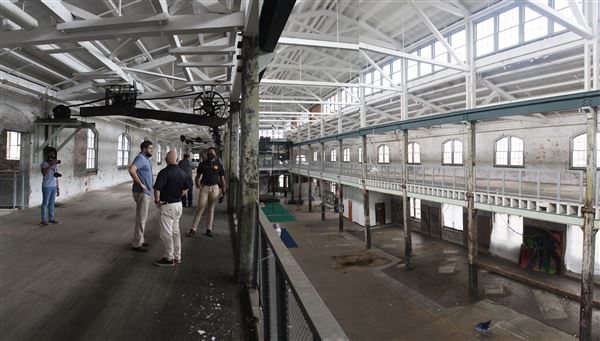
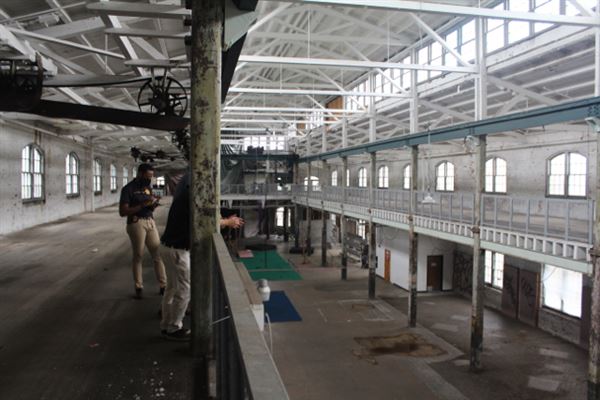
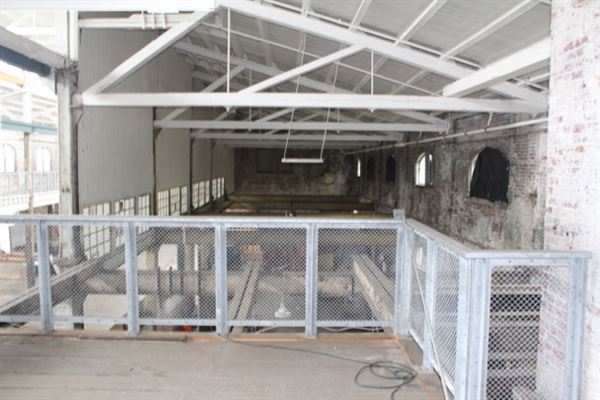
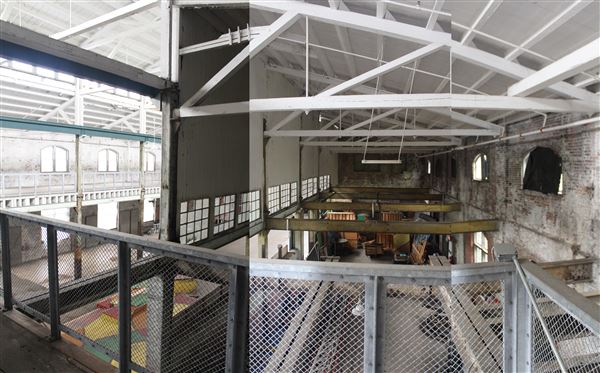
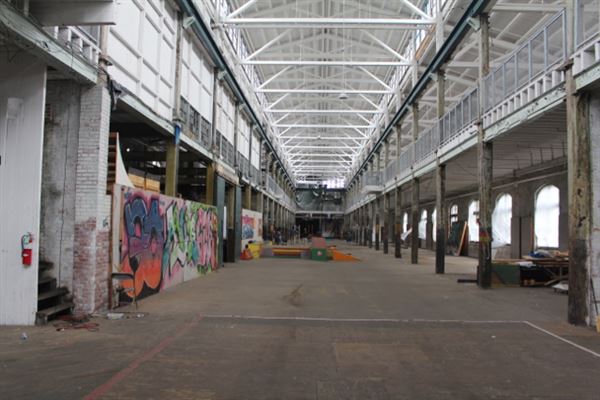
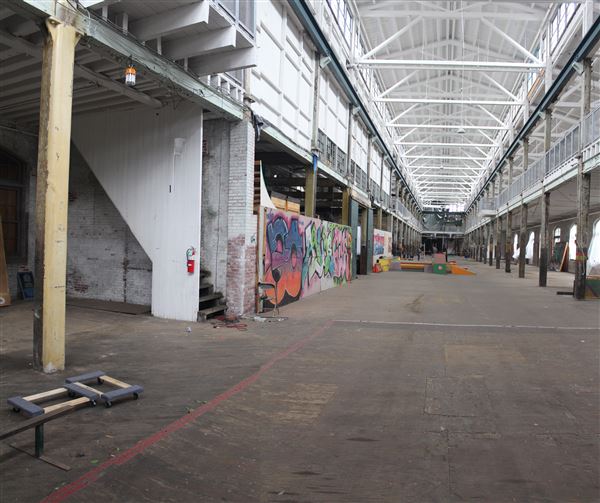
4 football field-sized buildings dating from 1908–1929. John A. Roebling, the designer of the Brooklyn Bridge, founded his steel wire manufacturing company on the site in 1849. The location, on the western side of the Chambersburg, now a neighborhood of Trenton, was chosen for its location alongside the Delaware and Raritan Canal, since buried underneath Route 129. The location also had easy access to the rail and port connections of the growing city. Under Roebling's sons the business grew, with the Trenton complex ultimately becoming Trenton's largest and most famous employer. The steel wire manufactured in block 3 was used for many famous bridges and projects, from the North Sea Mine Barrage in World War I to the Golden Gate Bridge during the Great Depression. The Roebling works made the greatest contribution to Trenton's reputation as an industrial center, memorialized in the motto "Trenton Makes, the World Takes" on the Lower Trenton Bridge. The business was sold by the Roebling's in 1953 and operations in Trenton stopped in 1974.
The remaining buildings on the site are the Clark Street Rope Shop (built in 1917), the Boiler House (built in 1916), the Engine House (built in 1917), the Carpenter Shop (built in 1908), and the Elmer Street Rope Shop North Extension (built in 1929).